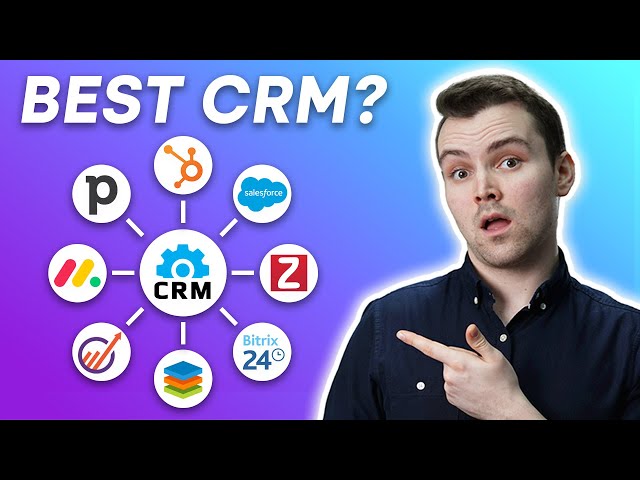
A customer relationship management (CRM) tool is a software application that helps businesses manage and track their interactions with customers and potential customers. These tools can be used for a variety of purposes, including:
- Tracking customer contact information
- Managing sales leads
- Providing customer service
- Automating marketing campaigns
CRM tools can be a valuable asset for businesses of all sizes. They can help businesses improve their customer relationships, increase sales, and reduce costs.
The first CRM tool was developed in the early 1980s. Since then, CRM tools have evolved significantly. Today, there are a wide variety of CRM tools available, ranging from simple contact managers to complex enterprise-wide systems.
CRM tools are now an essential part of the marketing toolkit. They can help marketers track customer behavior, target marketing campaigns, and measure the effectiveness of marketing efforts.
In the following sections, we will explore the different types of CRM tools available, the benefits of using CRM tools, and how to choose the right CRM tool for your business.
CRM Tools for Marketing
CRM (customer relationship management) tools for marketing are essential for businesses that want to improve their customer relationships and increase sales. These tools can help marketers track customer behavior, target marketing campaigns, and measure the effectiveness of marketing efforts.
- Centralization: CRM tools provide a central repository for all customer data, making it easy for marketers to access the information they need to create targeted marketing campaigns.
- Automation: CRM tools can automate many marketing tasks, such as sending emails, scheduling appointments, and tracking customer interactions. This can free up marketers to focus on more strategic initiatives.
- Integration: CRM tools can be integrated with other marketing software, such as email marketing platforms and social media management tools. This allows marketers to create a seamless marketing experience for their customers.
- Analytics: CRM tools provide robust analytics that can help marketers track the performance of their marketing campaigns and measure the impact of their efforts on sales.
- Collaboration: CRM tools can facilitate collaboration between marketing and sales teams. This can help ensure that marketing campaigns are aligned with sales goals and that customer needs are being met.
By leveraging these key aspects, businesses can use CRM tools for marketing to improve their customer relationships, increase sales, and achieve their marketing goals.
Centralization
Centralization is a key aspect of CRM tools for marketing because it provides marketers with a single, unified view of all customer data. This data can include customer contact information, purchase history, marketing campaign engagement, and customer service interactions. By having all of this data in one place, marketers can easily access the information they need to create targeted marketing campaigns that are tailored to the specific needs and interests of each customer.
For example, a marketer might use a CRM tool to create a targeted email campaign for customers who have recently purchased a specific product. The marketer can use the CRM tool to segment the customer list based on purchase history and then create an email campaign that is specifically tailored to the interests of those customers. This type of targeted marketing is much more effective than sending out a mass email campaign to all customers, regardless of their individual needs and interests.
In addition to making it easy to create targeted marketing campaigns, centralization can also help marketers track the results of their marketing efforts. By tracking customer behavior and engagement, marketers can see which campaigns are most effective and which ones need to be improved. This information can help marketers optimize their marketing campaigns and improve their overall marketing ROI.
Overall, centralization is a key aspect of CRM tools for marketing because it provides marketers with a single, unified view of all customer data. This data can be used to create targeted marketing campaigns, track the results of marketing efforts, and improve overall marketing ROI.
Automation
Automation is a key aspect of CRM tools for marketing because it can free up marketers to focus on more strategic initiatives. By automating tasks such as sending emails, scheduling appointments, and tracking customer interactions, CRM tools can save marketers a significant amount of time and effort. This allows marketers to focus on more important tasks, such as developing marketing campaigns, analyzing data, and building relationships with customers.
-
Reduced time spent on administrative tasks
CRM tools can automate many of the administrative tasks that marketers typically perform, such as sending emails, scheduling appointments, and tracking customer interactions. This can free up marketers to spend more time on strategic initiatives, such as developing marketing campaigns and analyzing data.
-
Improved efficiency and productivity
By automating tasks, CRM tools can help marketers improve their efficiency and productivity. This is because CRM tools can perform tasks much faster and more accurately than humans. As a result, marketers can get more work done in less time.
-
Increased accuracy and consistency
CRM tools can help marketers improve the accuracy and consistency of their marketing efforts. This is because CRM tools can automate tasks according to pre-defined rules and processes. As a result, marketers can be sure that their marketing efforts are being executed correctly and consistently.
-
Improved customer satisfaction
CRM tools can help marketers improve customer satisfaction by providing them with the tools they need to provide better customer service. For example, CRM tools can help marketers track customer interactions, identify customer trends, and resolve customer issues quickly and efficiently.
Overall, automation is a key aspect of CRM tools for marketing because it can free up marketers to focus on more strategic initiatives, improve efficiency and productivity, increase accuracy and consistency, and improve customer satisfaction.
Integration
Integration is a key aspect of CRM tools for marketing because it allows marketers to connect all of their marketing data and activities in one place. This provides marketers with a complete view of the customer journey, from initial contact to purchase and beyond. With this information, marketers can create more personalized and relevant marketing campaigns that are tailored to the specific needs and interests of each customer.
For example, a marketer might use a CRM tool to integrate their email marketing platform with their social media management tool. This would allow the marketer to track the performance of their email campaigns on social media and see which social media posts are driving the most traffic to their website. This information can then be used to create more targeted and effective marketing campaigns.
In addition to providing a complete view of the customer journey, integration can also help marketers automate their marketing activities. By connecting different marketing tools together, marketers can create automated workflows that trigger specific actions based on customer behavior. For example, a marketer might create an automated workflow that sends a welcome email to new customers and then follows up with a series of additional emails that provide more information about the company’s products and services.
Overall, integration is a key aspect of CRM tools for marketing because it allows marketers to create a seamless marketing experience for their customers. By connecting all of their marketing data and activities in one place, marketers can gain a complete view of the customer journey and create more personalized and relevant marketing campaigns.
Analytics
Analytics is a key aspect of CRM tools for marketing because it allows marketers to track the performance of their marketing campaigns and measure the impact of their efforts on sales. This information can be used to improve the effectiveness of marketing campaigns and increase sales.
-
Measuring campaign performance
CRM tools can track key metrics such as website traffic, email open rates, and conversion rates. This information can be used to measure the performance of marketing campaigns and identify areas for improvement.
-
Identifying trends and patterns
CRM tools can help marketers identify trends and patterns in customer behavior. This information can be used to develop more effective marketing campaigns and target the right customers.
-
Measuring ROI
CRM tools can help marketers measure the ROI of their marketing campaigns. This information can be used to justify marketing spend and make more informed decisions about marketing investments.
-
Improving customer satisfaction
CRM tools can help marketers improve customer satisfaction by providing them with the insights they need to deliver better customer service. For example, CRM tools can track customer interactions and identify areas where customers are experiencing problems.
Overall, analytics is a key aspect of CRM tools for marketing because it allows marketers to track the performance of their marketing campaigns, measure the impact of their efforts on sales, and improve customer satisfaction.
Collaboration
Collaboration between marketing and sales teams is essential for business success. Marketing teams need to understand the sales pipeline and sales goals in order to create effective marketing campaigns. Sales teams need to be aware of the marketing campaigns that are running in order to close deals more effectively. CRM tools can facilitate this collaboration by providing a central platform for both teams to share information and track progress.
For example, a marketing team can use a CRM tool to create a marketing campaign that is designed to generate leads for a specific product. The sales team can then use the CRM tool to track the progress of the campaign and see which leads are most likely to convert into customers. This information can help the sales team to prioritize their efforts and close deals more quickly.
In addition to improving collaboration between marketing and sales teams, CRM tools can also help businesses to better understand their customers. By tracking customer interactions and preferences, CRM tools can help businesses to create more personalized marketing campaigns and improve customer service. This can lead to increased sales and improved customer satisfaction.
Overall, collaboration is a key aspect of CRM tools for marketing. By facilitating collaboration between marketing and sales teams, CRM tools can help businesses to align their marketing campaigns with sales goals, better understand their customers, and increase sales.
FAQs on CRM Tools for Marketing
CRM (customer relationship management) tools for marketing are an essential part of the modern marketing toolkit. They can help businesses track customer behavior, target marketing campaigns, and measure the effectiveness of marketing efforts. However, there are still some common questions and misconceptions about CRM tools for marketing.
Question 1: What are the benefits of using CRM tools for marketing?
CRM tools for marketing offer a number of benefits, including:
- Centralization of customer data: CRM tools provide a central repository for all customer data, making it easy for marketers to access the information they need to create targeted marketing campaigns.
- Automation of marketing tasks: CRM tools can automate many marketing tasks, such as sending emails, scheduling appointments, and tracking customer interactions. This can free up marketers to focus on more strategic initiatives.
- Integration with other marketing software: CRM tools can be integrated with other marketing software, such as email marketing platforms and social media management tools. This allows marketers to create a seamless marketing experience for their customers.
- Analytics and reporting: CRM tools provide robust analytics and reporting that can help marketers track the performance of their marketing campaigns and measure the impact of their efforts on sales.
Question 2: How do I choose the right CRM tool for my business?
When choosing a CRM tool for your business, it is important to consider the following factors:
- Your business size and needs: The size and complexity of your business will determine the features and functionality that you need in a CRM tool.
- Your budget: CRM tools can range in price from free to tens of thousands of dollars per year. It is important to set a budget before you start shopping for a CRM tool.
- Your marketing goals: What do you want to achieve with a CRM tool? Do you need to track customer interactions, automate marketing tasks, or generate leads? Once you know your goals, you can start to evaluate CRM tools that can help you achieve them.
Question 3: How do I get started with a CRM tool?
Getting started with a CRM tool is relatively easy. Here are a few steps to get you started:
- Choose a CRM tool that is right for your business.
- Set up your CRM tool and import your customer data.
- Train your marketing team on how to use the CRM tool.
- Start using the CRM tool to track customer interactions, automate marketing tasks, and measure the effectiveness of your marketing campaigns.
Question 4: How can I use a CRM tool to improve my marketing campaigns?
CRM tools can be used to improve your marketing campaigns in a number of ways, including:
- Segmentation: CRM tools can help you segment your customer list based on demographics, interests, and behavior. This allows you to create more targeted marketing campaigns.
- Personalization: CRM tools can help you personalize your marketing messages based on each customer’s individual needs and preferences.
- Tracking and measurement: CRM tools can help you track the performance of your marketing campaigns and measure the impact of your efforts on sales.
Question 5: What are the common mistakes to avoid when using CRM tools for marketing?
There are a few common mistakes to avoid when using CRM tools for marketing, including:
- Not using a CRM tool to its full potential: Many businesses purchase a CRM tool but do not use it to its full potential. This can be a waste of money and resources.
- Not integrating your CRM tool with other marketing software: CRM tools can be even more powerful when they are integrated with other marketing software, such as email marketing platforms and social media management tools.
- Not training your marketing team on how to use the CRM tool: It is important to train your marketing team on how to use the CRM tool so that they can get the most out of it.
Question 6: What is the future of CRM tools for marketing?
The future of CRM tools for marketing is bright. CRM tools are becoming increasingly sophisticated and affordable, making them accessible to businesses of all sizes. In the future, CRM tools will likely become even more integrated with other marketing software and will play a even more important role in helping businesses to track customer behavior, target marketing campaigns, and measure the effectiveness of marketing efforts.
CRM tools for marketing are a powerful tool that can help businesses improve their marketing campaigns and increase sales. By understanding the benefits of CRM tools and how to use them effectively, businesses can gain a competitive advantage in today’s marketplace.
To learn more about CRM tools for marketing, please contact a CRM vendor or consultant.
CRM Tools for Marketing Tips
Customer relationship management (CRM) tools are a powerful asset for businesses of all sizes. They can help businesses track customer behavior, target marketing campaigns, and measure the effectiveness of marketing efforts. However, there are some important tips to keep in mind when using CRM tools for marketing.
Tip 1: Choose the right CRM tool for your business.
There are many different CRM tools on the market, so it is important to choose one that is right for your business. Consider the size of your business, your budget, and your marketing goals when making your decision.
Tip 2: Implement your CRM tool correctly.
Once you have chosen a CRM tool, it is important to implement it correctly. This includes setting up the tool, importing your customer data, and training your team on how to use it.
Tip 3: Use your CRM tool to track customer interactions.
CRM tools can be used to track all types of customer interactions, including website visits, phone calls, and emails. This information can be used to create a complete picture of the customer journey.
Tip 4: Use your CRM tool to segment your customer list.
CRM tools can be used to segment your customer list based on demographics, interests, and behavior. This information can be used to create targeted marketing campaigns that are more likely to be successful.
Tip 5: Use your CRM tool to automate your marketing tasks.
CRM tools can be used to automate a variety of marketing tasks, such as sending emails, scheduling appointments, and tracking customer interactions. This can free up your marketing team to focus on more strategic initiatives.
Tip 6: Use your CRM tool to measure the effectiveness of your marketing campaigns.
CRM tools can be used to track the performance of your marketing campaigns and measure the impact of your efforts on sales. This information can be used to improve the effectiveness of your marketing campaigns and increase your ROI.
Tip 7: Use your CRM tool to collaborate with your sales team.
CRM tools can be used to facilitate collaboration between marketing and sales teams. This can help ensure that marketing campaigns are aligned with sales goals and that customer needs are being met.
Tip 8: Get the most out of your CRM tool.
CRM tools are a powerful tool that can help businesses improve their marketing efforts and increase sales. By following these tips, you can get the most out of your CRM tool and achieve your marketing goals.
By following these tips, you can use CRM tools to improve your marketing campaigns, increase sales, and build stronger customer relationships.
Conclusion
In conclusion, CRM tools are an indispensable asset for businesses looking to enhance their marketing strategies and drive growth. They provide a centralized platform for managing customer data, automating marketing tasks, and gaining valuable insights into customer behavior. By leveraging the capabilities of CRM tools, marketing teams can effectively segment their target audience, deliver personalized experiences, track campaign performance, and measure the impact of their efforts on sales.
Embracing CRM tools enables businesses to make data-driven decisions, optimize their marketing campaigns, and build stronger relationships with their customers. As technology continues to advance, CRM tools will undoubtedly evolve, offering even more sophisticated features and capabilities. Businesses that invest in CRM tools today will be well-positioned to stay ahead of the curve and thrive in the competitive marketing landscape of tomorrow.
Youtube Video: